

What actually moves the gold price
Four forces set the price of gold, and they do not carry equal weight. Here is what each one does, in the order it matters.
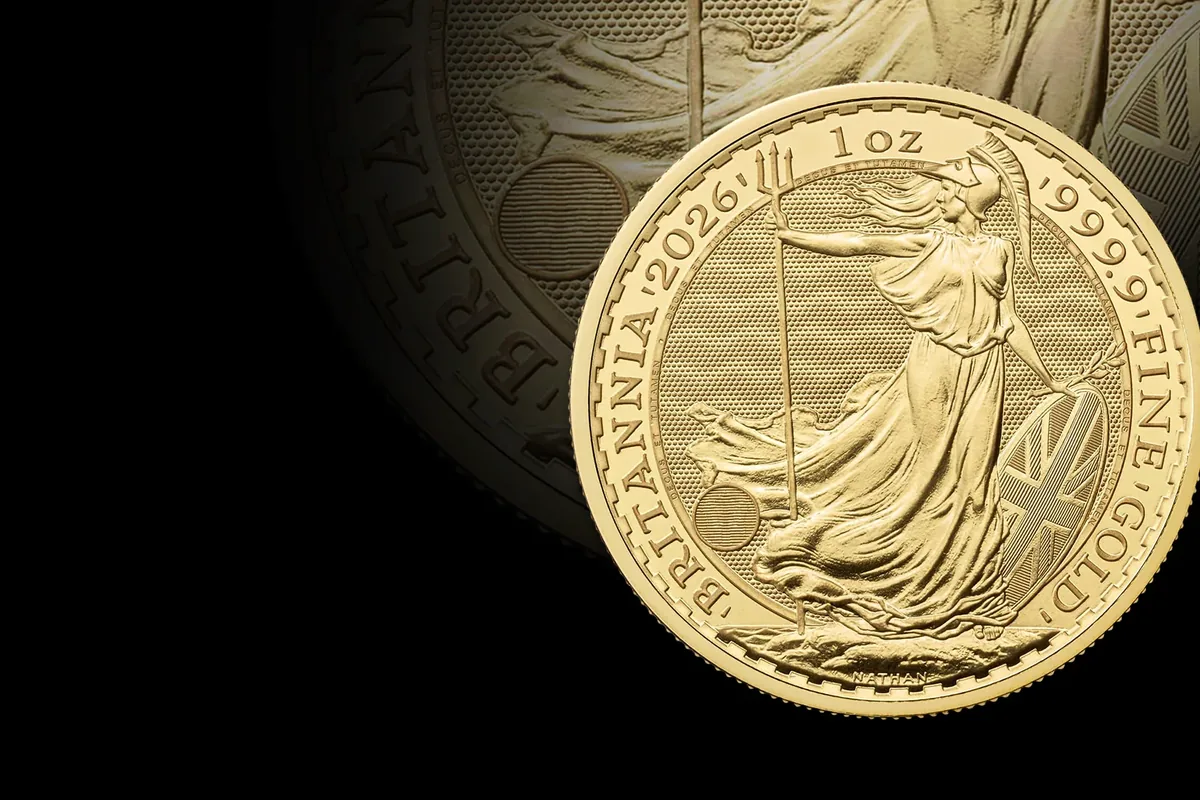
Gold has no earnings, no coupon and no dividend. Nothing about it generates a cash flow you could discount, which means it cannot be valued the way a share or a bond can. What it has instead is a price set entirely by what people are willing to pay to hold it rather than hold something else.
That makes the question "what is gold worth?" unanswerable in the abstract and the question "why did gold move today?" answerable with reasonable confidence. Four forces do most of the work. They are listed here in roughly descending order of how much of gold's variance they explain.
Why real yields matter more than inflation
Gold is routinely described as an inflation hedge. The mechanism is usually stated wrongly. Gold does not respond to inflation directly; it responds to inflation relative to interest rates.
Consider two worlds with 6% inflation. In the first, the central bank has pushed its policy rate to 8%: a saver earns 2% after inflation, so holding a metal that yields nothing is expensive. In the second, the rate is 2%: the saver loses 4% a year in real terms simply for holding cash, and an asset yielding nothing suddenly costs nothing to hold. Same inflation, opposite implication for gold.
This is why gold did badly through the early 1980s despite high inflation — rates were higher still — and why it can do well in periods of unremarkable inflation when policy is loose. See gold and interest rates for the longer version, and gold and inflation for what the record actually shows.
What this means for a sterling buyer
Everything above describes gold in dollars. If you are in the UK, your return has a second moving part: the exchange rate. A sterling holder owns a dollar-denominated asset, so the pound's moves against the dollar land directly in the sterling price.
The practical consequence is that the headline you read — "gold up 1%" in a wire story written for a dollar audience — is frequently not the number in your account. On days when sterling strengthens sharply, gold can rise in dollars and fall in pounds. We split those two legs apart on every price page precisely because the combined figure hides it.
What moves it less than people think
- Mine supply. Annual mine output is roughly 1.5% of all the gold ever produced, and a new mine takes a decade from discovery to pour. Supply is effectively fixed on any horizon a price reacts to.
- Jewellery demand. Large in volume and highly price-sensitive — it tends to fall as prices rise, which makes it a stabiliser rather than a driver.
- Recycling. Rises with the price, dampening rallies. Again a response, not a cause.
- Industrial use. Real but small. Gold is not copper; electronics demand does not set the price.
The useful mental model is that gold's price is set in the financial market, not the physical one. The physical market determines who ends up holding the metal; the financial market determines what it costs.
The price history is temporarily unavailable.
The rest of this page is unaffected. Please try again shortly.
Gold over five years, in your chosen currency.
How to read a day's move
A workable checklist, in order. What did real yields do — usually visible in the ten-year inflation-protected yield? What did the dollar do? Was there an official-sector announcement? And only then: was there news? Most days the answer is contained in the first two questions, and most published explanations skip straight to the fourth.
That is the discipline behind our daily why is gold moving page: drivers in order of evidence, not in order of drama.
Sources and further reading
- Gold Demand TrendsWorld Gold Council (opens in a new tab)
- Statistical releases: official reserve assetsInternational Monetary Fund (opens in a new tab)
We link to primary sources wherever one exists. If you believe something here is wrong, our corrections policy sets out how we handle it.
About this byline
Gold Price Report Desk
Markets desk
The Gold Price Report desk is the collective byline for work produced by the editorial team. We use it for market reports, data explainers and anything assembled from our own price series rather than reported by one person. Individual journalists are credited by name on their own work, with a biography and a record of what they cover. We would rather carry one honest desk byline than invent reporters who do not exist.
The daily report
Stay ahead of the gold market
Breaking gold news, market analysis and price intelligence, written here and sent to your inbox when it launches.
Not open yet
Signups are not open. We are not collecting addresses until there is a newsletter to send, so there is nothing to type here yet.
Related coverage
Gold and interest rates: the only relationship that reliably holds
It is not the policy rate that matters. It is the real yield, and it is the expectation rather than the announcement.
Is gold an inflation hedge? What the record actually shows
Over a century, yes. Over any period a person actually invests for, the answer is considerably more awkward.
Gold and the dollar: why your sterling price can fall on a day gold rises
Gold is quoted in dollars. If you are in the UK, half of what you experience is the exchange rate — and almost nobody separates the two.