

Coin grading explained
A number out of 70, assigned by a third party and sealed in a holder. What it measures, what it adds, and when it is worth paying for.
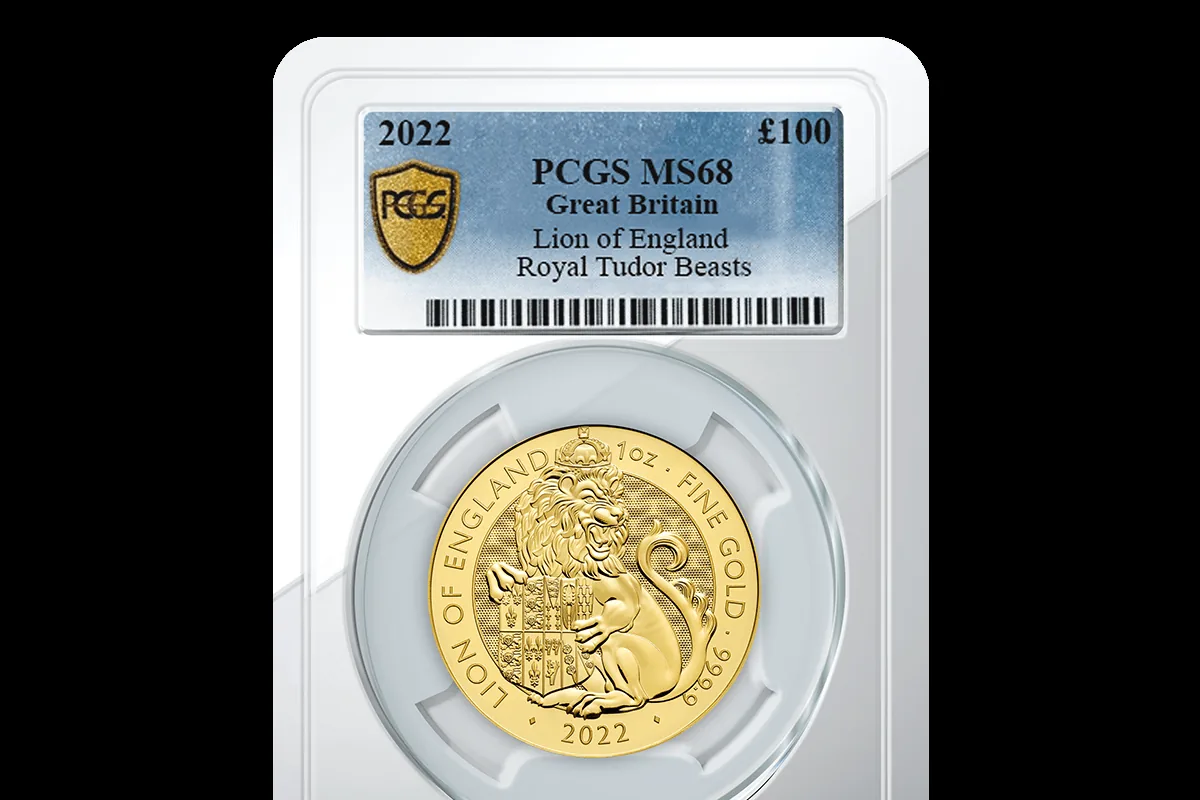
Third-party grading takes a coin, authenticates it, assigns a condition grade on a 70-point scale, and seals it in a tamper-evident holder with the grade printed on the label. The two best-known graders are PCGS and NGC.
Reading the label
The scale descends from 70, which is a coin with no post-production imperfection visible under magnification. A prefix states the coin’s type of finish:
- MS — mint state, an uncirculated business or bullion strike. MS-70 is flawless, MS-65 is a strong coin with minor marks.
- PR or PF — proof, for coins struck as proofs.
- AU, XF, VF and below — circulated grades, in descending order of preservation.
So a 1oz gold coin labelled MS-68 is an uncirculated strike with a few minor imperfections. The grade says nothing about the gold content, which is fixed by the specification.
What grading is genuinely worth
For anything held primarily for metal value, the reference price is the number that matters:
About this byline
Gold Price Report Desk
Markets desk
The Gold Price Report desk is the collective byline for work produced by the editorial team. We use it for market reports, data explainers and anything assembled from our own price series rather than reported by one person. Individual journalists are credited by name on their own work, with a biography and a record of what they cover. We would rather carry one honest desk byline than invent reporters who do not exist.
The daily report
Stay ahead of the gold market
Breaking gold news, market analysis and price intelligence, written here and sent to your inbox when it launches.
Not open yet
Signups are not open. We are not collecting addresses until there is a newsletter to send, so there is nothing to type here yet.
Related coverage
Proof or bullion?
The same coin, struck two different ways, sold at two very different prices. Only one of them is a bet on the gold price.
How to tell if gold is real
Five checks, in the order a professional does them — starting with the one that costs nothing and ending with the one that settles it.
Gold bars or coins?
Bars are usually the cheaper way to hold a given weight. Coins are usually the easier way to sell part of it, and in the UK the tax treatment is not the same.